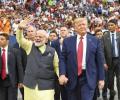
No single individual, institution, or action is to blame for this. The BJP is responding in kind -- definitely not without checking with its government. And they wait for Mr Trump, notes Shekhar Gupta.

Trudeau claimed the Indian diplomats were collecting information on Canadians who are in disagreement with the Narendra Modi government and passing it to the highest levels within the Indian government and criminal organisations like the Lawrence Bishnoi gang.

A non-strategic investor like Poonawalla brings in not only capital but also creative freedom. Indian cinema needs more investors like him, reports Vanita Kohli Khandekar.

Seers from various 'akharas' took the first 'Amrit Snan' at the Maha Kumbh on Makar Sankranti on Tuesday as an unbroken stream of people converged at the Triveni Sangam on the occasion with around 3.5 crore devotees taking a dip.

With several Indian educational institutes offering programmes from foreign universities, there could be a \n\ndecrease in the number of students travelling abroad to pursue these courses.

Among Sensex shares, Hindustan Unilever, Bharti Airtel, Tech Mahindra, Infosys, Mahindra & Mahindra, ICICI Bank, ITC and Asian Paints were the biggest winners. On the other hand, Kotak Mahindra Bank, Reliance Industries, NTPC, UltraTech Cement and Power Grid were among the laggards.
President Droupadi Murmu on Saturday approved 139 Padma awards including seven Padma Vibhushans, 19 Padma Bhushans and 113 Padma Shris.

India and Canada have mutually beneficial political and economic linkages. The two countries should get together and find a solution. The expulsion war should, in the meantime, be a guarantee against any deterioration of the situation, asserts Ambassador T P Sreenivasan, the first Indian head of mission to be ever expelled by any country.
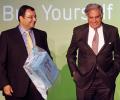
Ratan Tata: A Life, the much awaited biography, reveals that after a year of 'parallel running', Tata began having second thoughts about Cyrus Mistry's 'suitability'. 'Mistry targeted Ratan, the man who had elevated him from virtual oblivion into the mainstream of the Tatas...'

Global firm Accenture's fourth quarter results prove that the worst is behind for the Indian information technology (IT) sector, said analysts on Friday (September 27). While the pace and the broadness of recovery is debatable, they said Accenture's results and revenue growth guidance for the next financial year (FY25) reduce downside risks for Indian IT companies.

The 38.5 million enrolled for higher education in 2019-2020 outnumbered Canada's entire population of 38.2 million.

While Canada denies harbouring extremists or terrorists, Kugelman pointed out that India remains firm in its disagreement.

The role of foreign investors in the Indian capital market is gaining significant momentum, as foreign stake in Indian companies has shown a sharp upturn in the quarter ended September 30, which saw net inflows of $12 billion.

'IPOs have performed exceptionally well, with a notable increase in average ticket size from Rs 800 crore in the last financial year to around Rs 1,300 crore in this financial year.'

'Investors may have made money in mid and smallcaps due to market momentum, but now they need to focus on fundamentals.'
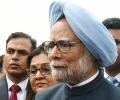
Condolences have poured in from across the globe, including from the United States, Canada and Sri Lanka following the demise of former Prime Minister Manmohan Singh.
The India-US nuclear deal was aimed at ending India's nuclear isolation and nuclear apartheid, recalls Rup Narayan Das.

A delegation of high-level executives from US public pension funds (non-profit and government sectors) is visiting India next week to assess and familiarise themselves with the investment opportunities in the country. These executives belong to various American states and cumulatively represent $1.8 trillion in assets under management (AUM) invested across the US and global markets. The United States (US) mission to India, which includes its embassy and consulates and the Department of Treasury, along with India's Ministry of Finance and the National Investment and Infrastructure Fund (NIIF), is hosting the delegation.

Among the 30 Sensex firms, Adani Ports and Power Grid climbed over 3 per cent each. Tata Steel, JSW Steel, Infosys, Mahindra & Mahindra, Maruti, and Larsen & Toubro were the other big gainers. IndusInd Bank, Bharti Airtel, Hindustan Unilever, Tech Mahindra and Titan were the laggards.

Khedkar, who was from the 2023 batch, has been accused of cheating and wrongly availing Other Backward Classes and disability quota benefits to ensure her selection in the government service.
The Bharatiya Janata Party on Tuesday received support from unexpected quarters over the BBC documentary on Prime Minister Narendra Modi, with senior Congress leader and former Kerala Chief Minister A K Antony's son Anil saying that placing the views of the British broadcaster over Indian institutions would "undermine" the country's sovereignty.

Domestic institutional investors pumped Rs 2.3 trillion into equities during H1 CY24. Of this, mutual funds contributed 80%.

RBI interest rate decision, macroeconomic data and global trends would guide markets' movement this week, analysts said. Besides, trading activity of foreign investors and the last batch of Q1 earnings announcements would also guide trends in equities. HSBC PMI (Purchasing Managers' Index) for the services sector is scheduled to be announced on Monday.

'He is convinced that this will help him in the next election.' 'But as we know, the best laid plans of mice and men can go awry.'

After allowing FDI by foreign carriers in their Indian counterparts, the government has put in place provisions to prevent Indian airlines from being controlled and managed by the foreign investor.

Once we break free of the idea that land is scarce, real estate is just a pile of bricks, steel, and glass. Any price surge will kick off a supply response, which kills off the possibility of sustained price appreciation, points out Ajay Shah.

The ministry of home affairs has suspended the Foreign Contribution Regulation Act (FCRA) licence of prominent public think-tank Centre for Policy Research (CPR) over violation of laws, officials said on Thursday.

'Disengagement is merely the first step in a lengthy process of arriving at a new normal along the LAC in Eastern Ladakh and the entire land boundary.' 'The Indian government should insist on the restoration of the status quo ante in Eastern Ladakh.'

'Trump's disregard for norms and institutions could prove very costly for America's social fabric.'

Ms Swaraj was a conscientious woman who understood suffering and pathos and attempted in her inimitable way to mitigate them, recalls Rup Narayan Das.

Benchmark equity indices Sensex and Nifty slumped over 1 per cent on Friday, tracking a weak trend in global markets and fresh foreign fund outflows. Falling for the third day running, the 30-share BSE Sensex tumbled 1,017.23 points or 1.24 per cent to settle at 81,183.93.

Tharoor said people of the country have the freedom to watch or not watch the BBC documentary on the 2002 riots and asked who can say the British broadcaster has no right to do a story on the topic.

The depiction of hijackers of the Indian Airlines flight from Kathmandu to Delhi has kicked off a row with a section of viewers objecting to the 'humane' projection of the perpetrators.

Several changes have been carried out in the existing rules or Civil Aviation Requirements, including one which clearly states that a passenger airline 'shall not enter into an agreement with a foreign investing institution or a foreign airline, which may give such foreign investing institution or foreign airlines or others on behalf of them, the right to control the management of the domestic operator.'

'I don't think Waheeda had the confidence that I could pull it off, so she said no.'

rediffGURU Nayagam PP counsels students and aspiring professionals on how to pick the right courses and scale up in your career.

'To attribute motives to the individual election commissioner or the Election Commission as a group is very unfair.'

'Prime Minister Narendra Modi should have called his MLAs and ministers and said 'this should not happen in India. Manipur is not a part of any banana republic, I will not allow this to happen, talk it out, what is the problem'

During the briefing, Jaiswal reiterated that so far no evidence has been shared by Canada.

ITC, State Bank of India, HCL Technologies and IndusInd Bank were the other big laggards. NTPC, UltraTech Cement, HDFC Bank and Mahindra & Mahindra were among the gainers.
 © 2026 Rediff.com - Advertise with us - Disclaimer - Privacy Policy - Sitemap - Feedback - About us - Terms of use - Grievances